
Design Considerations for a Custom Dipstick in Heavy Equipment and Industrial Engines
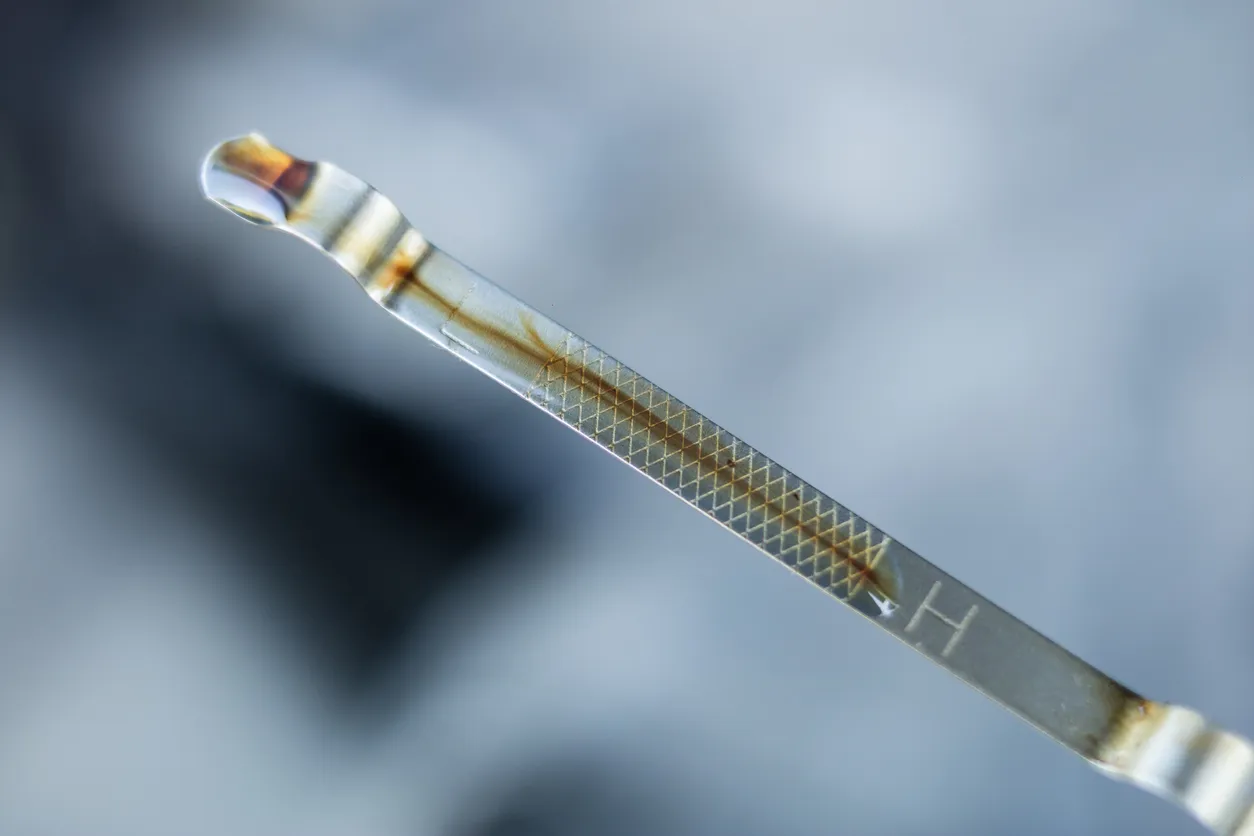
A custom dipstick should be designed and engineered as a complete system. The indicator, guide tube, handle, seals, mounting points, and engine interface should all be factored into the equation rather than thinking simply of a metal strip.
Accurate readings are dependent upon the relationship between the fully seated handle, the installed tube, and the oil-level marks. Reliability in achieving these readings comes from routing, retention, and service access.
RB Royal details more in our latest blog by specifically focusing on the design considerations for a custom dipstick in heavy equipment and industrial engines.
Establish Measurement Reference
The critical dimension is the distance from the handle’s seated reference to the measuring section in the installed assembly. The complete blade length by itself doesn’t establish whether the dipstick reads properly.
Tube installation depth, handle seating position, and sump geometry all impact that relationship.
| Action | Specification Requirement |
|---|---|
| Define | A repeatable, fully seated handle position |
| Establish | The required oil level marks for the actual engine and sump configuration |
| Control | The dimensions linking the engine interface, tube, handle, and graduations |
| Verify | The marks on the assembled dipstick and tube |
Design Routing and Blade Construction Together
When beginning the design process, it’s a strong starting effort to include the blade construction design around how the dipstick is going to be mounted into the engine. This can take place with the engine installation’s CAD geometry or, if available, physical measurements. Properly identify the engine connection, desired service location, and then any obstacles between them.
| Design Consideration | Practical Implication |
|---|---|
| Short, relatively direct route | A rigid or semi-rigid blade may provide a suitable arrangement |
| Tight or complex route | A flexible indicator may be needed to negotiate the installation |
| Multiple bends | Verify insertion, withdrawal, and readable markings in the actual tube geometry |
| Nearby exhaust, belts, accessories | Check both installed clearance and the path used during removal and reinsertion |
Focusing on routing and blade construction for a custom dipstick also means considering blade flexibility. A flexible design is often used for tight or constrained installations and it’s critical to confirm that the indicator does not bind or contact surrounding hardware.
Materials and Fluid Exposure Should Match
A custom dipstick is commonly thought of for just oil measurements, but it can be used in any number of fluid level reading applications. During the design process, it’s important to match materials in the dipstick and the fluid those materials are going to be exposed to.
Some of the most common sealing options include nitrile rubber, hydrogenated nitrile rubber, silicone rubber, and fluoroelastomer. Teams can list out a compound, but that fails to serve as a sufficient qualification. Instead, fluid-immersion testing can assess swelling in specified fluids while heat-aging tests assess whether the seal and handle hold their dimensions.
Another important consideration is to ensure handle construction should be application specific in material selection.
Address Sealing and Retention Separately
Dipsticks need to be sealed at their interfaces and remain seated during operation. While these are related aspects, they are distinctly different requirements as well. Define and verify these key aspects of the assembly:
- Handle to tube seal and engine connection
- Retention or locking mechanism
- Required force for intentional removal
- Resistance to unintended loosening
- Protection against debris entering the tube during service
Retention should not be at the expense of routine checks and extraction force testing can confirm if the indicator stays in place while remaining removable by hand.
Partner with RB Royal for your Custom Dipstick Solutions
RB Royal are experts in fluid transfer systems solutions and out of our Fond du Lac, Wisconsin facility, we partner with OEMs for the manufacturing needs they need. Custom dipstick manufacturing with RB Royal can start off with the usage of our design-ufacturing program.
Our designers and engineers work together with your team to understand the scope of your project, the expected production volumes, and how we can make it manufacturable given our capabilities.
For our custom dipstick manufacturing capabilities, we currently offer three different handle shapes as well as three different blade types. All of our custom dipstick manufacturing operations are backed by our internal quality management systems
RB Royal has continuously been ISO 9001 certified since 1999 which demonstrates our ability to adhere to globally recognized quality management system practices and protocols.
Does your team need custom dipstick manufacturing operations for heavy equipment or industrial engines? Contact RB Royal today for more information and how our team can make a difference for you.