
What is FMEA in Manufacturing? Highlighting the Benefits and When to Use It
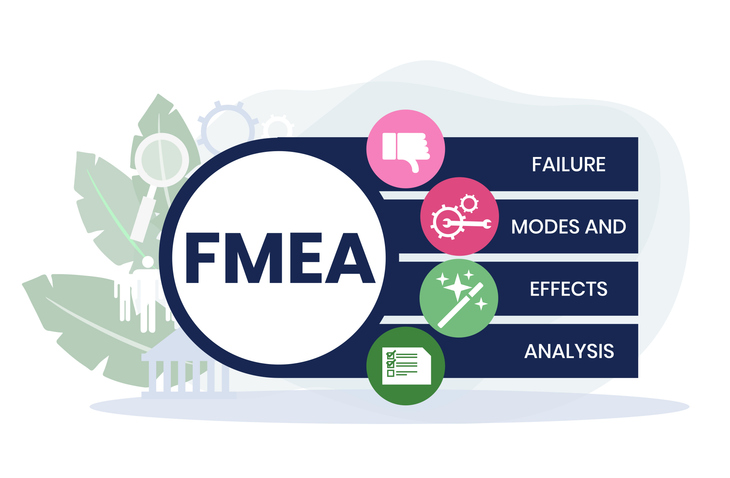
Quality control and management systems are essential in all manufacturing services. A key way to validate quality is through various testing operations and analysis metrics, including FMEA. But what is FMEA?
Failure mode and effects analysis (FMEA) is a structured, sequential method to identify how a product might fail, estimate the impact of the potential failures, and then prioritize solutions to reduce or eliminate those problems.
RB Royal explores the benefits of utilizing FMEA, when to use it, and why it matters.
Key Benefits in Manufacturing
FMEA benefits can greatly impact the overall product, manufacturing services, and even design phases. It’s all dependent upon when the analysis protocols are run and how many times they are performed.
One of the largest and most apparent benefits of FMEA is early risk detection in products. The sooner manufacturers identify potential risks and problems in a design or a production cycle, the faster a response can be created to either eliminate or drastically reduce those risks.
When identifying risks and reducing them, manufacturers are able to create higher-quality and more reliable products. This also helps with defect rates and scrap waste, and improves customer relationships.
Products with reduced risks and fewer problems are also inherently safer and reach the open market faster by hitting key compliance measures and standards.
Additionally, FMEA capabilities promote and support continuous improvement throughout both the design and production processes.
Best Applications
- Designing a new product, process, or service so that any potential risks or problems are identified prior to production.
- When design changes are being made for an existing product, or if it is a process-related analysis, rolling out new steps and changes to an existing process.
- If a product, process, or service has a specific quality, reliability, or safety improvement goal. Additionally, if a product has a large failure, defect, or customer issue, FMEA can be used to identify and correct the problem or problems.
- Even the most successful, long-standing products should have FMEA procedures performed to verify that designs and key steps remain effective. Performing FMEA operations on successful products also supports audits, certifications, and continuous improvement programs.
Why FMEA Matters
While listing out the benefits and applications of FMEA provides context and clarity in stating its importance, there are a few more points to make regarding why this procedure should matter to manufacturers and customers.
- FMEA creates a real-world impact as manufacturers identify potential problems and risks that can change factors such as cost, lead times, logistics, quality, and customer satisfaction. Additionally, FMEA services can enhance both a manufacturer’s reputation and its customers’ by creating reliable and safe parts.
- When safer products enter the market, there are potential positive impacts on the retailer, supplier, and manufacturer, as customers experience the functionality of components.
- Overall customer experience and satisfaction can increase when FMEA operations are performed.
What is FMEA? Learn More by Contacting RB Royal Today
RB Royal is a full-service manufacturing company of fluid transfer system components, including turnkey tube capabilities. Quality matters to us, as highlighted by our continuous ISO 9001 certification and our testing and quality control measures.
We offer and perform FMEA services on all of our manufactured components as well as in our Design-ufacturing program. It’s critical to us that when parts leave our facility, they serve our customers.
Contact RB Royal today for more than just high-quality components, but for a long-lasting relationship and a manufacturer that is here for you.