
Thermal Expansion Pipe Design for Preventing Stress and System Failure
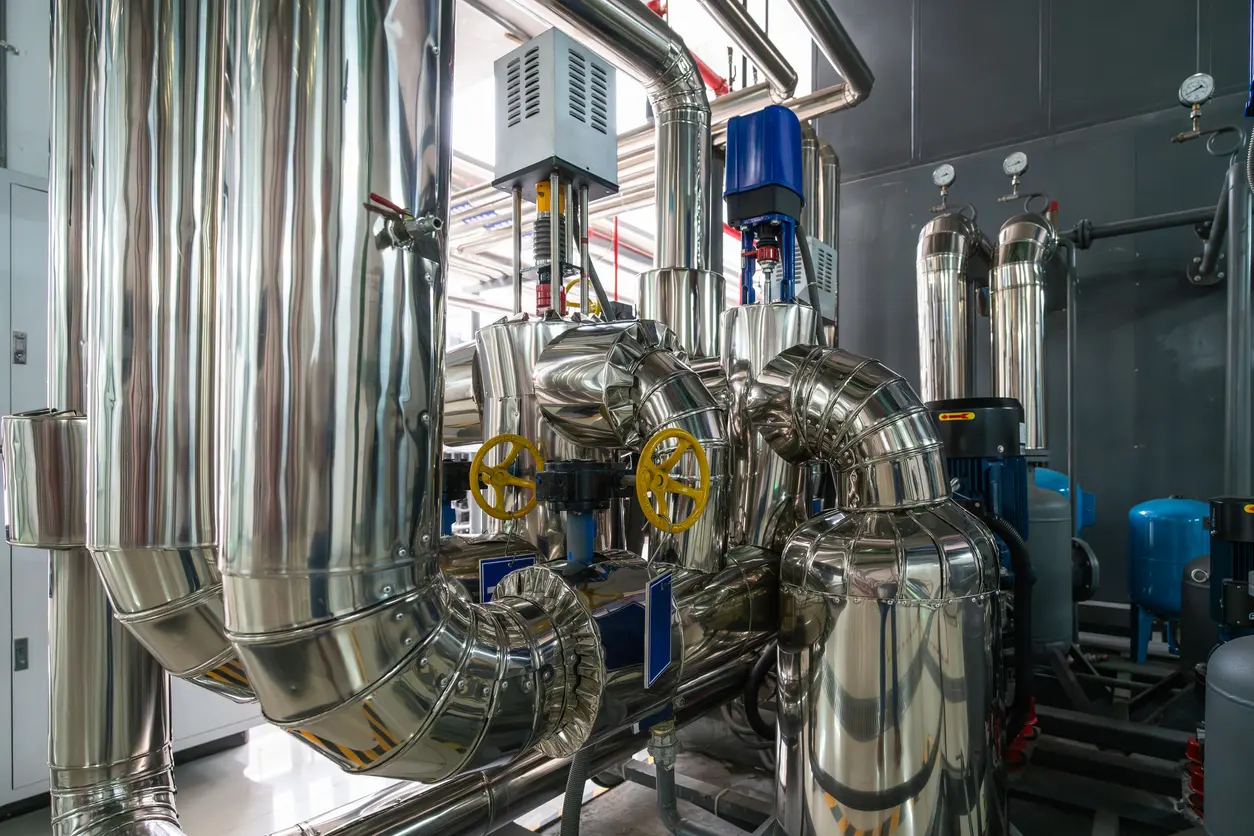
Thermal expansion pipes play a critical role in multiple fluid transfer systems including chemical refining, power generation applications, marine industries, and water and gas transmission systems.
Accounting for the potentially dangerous temperatures that move through the pipes means that thermal expansion pipe design and entire systems must adhere to stringent and thorough design considerations to prevent unnecessary stress and avoid the worst fear – system failure.
RB Royal details key design considerations in thermal expansion piping needs to avoid costly rework, prevent system failure and stress, and ultimately, unsafe working conditions.
Thermal Expansion Pipe Design Considerations
Design considerations for thermal expansion pipe systems begin with superior knowledge of the available space and tentative layout where the piping system will serve. Teams that know the space can account for pipes in their normal width as well as their expanded width by using the thermal growth formula. When this formula is accurately calculated, teams can lock in the dimensions of the expansion loops.
It’s best to avoid only straight, rigid fixed pipe runs that go in between equipment. If straight piping is used, axial stress becomes concentrated rather and destructive forces like nozzle loads are transferred to pumps and valves. Rather, utilize directional offsets such as L or Z bends or even engineered U-bends in expansion loops to convert the axial force into tolerable bending stress.
Like any design operation, material selection plays a pivotal role. Not only do teams have to account for the thermal expansion, but there are other factors at place including: the source of the thermal expansion, exterior environmental conditions, needed system lifecycle and life expectancy, and expected system maintenance windows. Weighing options, consider that plastic materials such as HDPE expand much more than metallic pipes.
Practical Rules
As a guide to design considerations, these practical rules serve as a bare bones template for proper design of thermal expansion piping systems.
- Incorporate bends and routed paths in your system rather than rigid, straight lines between equipment to avoid unnecessary stress and preventable system failures.
- Utilize elbows and offsets to create flexibility around nozzles and fixed points.
- Put anchors intentionally to direct expansion in accommodating spots.
- Use guides to control lateral movement to simultaneously allow axial growth.
- Vertical growth must be accommodated so incorporate spring support in order to prevent unloading the thermal expansion pipe.
Failure Prevention
Failure prevention in thermal expansion pipes is an equal mix of appropriate design considerations and proper installation and implementation of the piping system. Failures typically stem from system users ignoring movement or altering the installed routing and supports after a stress analysis has been performed.
When these actions happen, the results shouldn’t be surprising. Pipes can feature cracked welds, leaking flanges, equipment nozzle damage, sagging, and fatigue-related failures over time.
A differentiator for RB Royal is our FMEA capabilities – Failure Modes and Effects Analysis. We perform thorough testing of all our manufactured products to ensure successful implementation and application, including thermal expansion piping systems.
Contact RB Royal for Best Practices in Thermal Expansion Pipe Design and Implementation
RB Royal are industry-leading experts in custom fluid transfer solutions and out of our Fond du Lac, Wisconsin facility, our dedicated team of technicians, engineers, and senior leadership work together to create the systems OEMs and other customers rely on.
Thermal expansion pipe design and implementation has to be handled delicately and with supreme focus as one error can be costly beyond just rework. Our Design-ufacturing program allows custom designs by you, and we follow the blueprint to create a system that’s tailored to your exact needs. Our capabilities in pipe and tube manufacturing, bending, and testing and validation, backed by our ISO 9001 certification, means that high quality products aren’t the goal, they’re the expectation.
Contact RB Royal today for more information on thermal expansion pipe design and system implementation and how we can keep your team safe and your system operational.