
Carbon Steel Tubing Usages in Industrial Fluid Systems
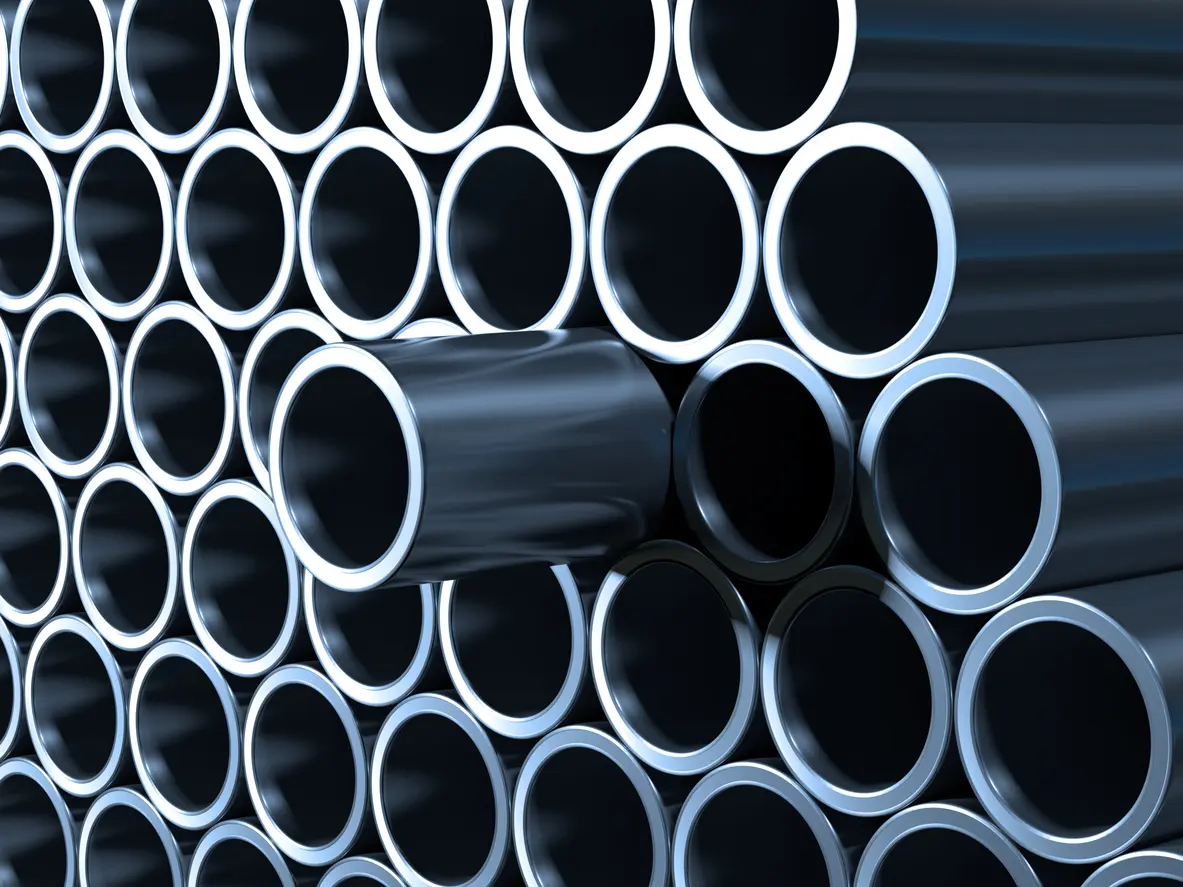
Industrial OEMs utilizing fluid systems have numerous material options for various aspects of the system, and yet, carbon steel tubing remains a popular option during the design and development of these systems.
From its cost-effectiveness and relative manufacturing ease to material strength, durability, and more, carbon steel tubing performs well in multiple industrial fluid systems. RB Royal highlights common usages and why carbon steel works.
Usages
Water Processing Plants
Carbon steel tubing is a common choice for water processing operations, specifically serving as plant water distribution, washdown lines, cooling-water headers, and more. Because of its relative fabrication ease and cost-effectiveness, it makes for a strong material selection in this area. A main concern, however, is that if carbon steel is used in untreated water applications, that water source and oxygen expedite internal corrosion within the system.
Closed-Loop HVAC Units
Chilled-water lines, heated-water lines, condenser-water, and district-energy loops are all examples of HVAC units utilizing carbon steel tubing. Carbon steel offers good life-cycle value in large diameter systems that are mechanically demanding, and again, the cost-effectiveness makes it an attractive choice. However, there needs to be an emphasis on oxygen control, water chemistry management, and tolerated corrosion allowance to not damage units.
Power Generation
Carbon steel tubing can be found in multiple power generation examples including boiler feedwater auxiliaries, cooling-water piping, steam and water service lines, and lube-oil systems. Power generation OEMs will turn to carbon steel for their tubing applications because of how it handles demanding mechanical duties. A caveat, however, is that different alloys might be necessary in systems to stave off the damage from high temperatures, cyclic service, and corrosion.
Why It Works
Carbon steel itself works as a tubing solution in industrial fluid systems through a few avenues, the first being its high tensile strength. The material makeup is commonly iron and carbon, which allows tubes to survive high internal and external pressures commonly found in industrial fluid systems.
It’s an excellent source of thermal conductivity, so in heat transfer applications, carbon steel can withstand both the high heat, but the pressure that heat brings with it. Additionally, carbon steel can easily be fabricated into the necessary shape the tubes need to be which streamlines any assembly and installation processes.
Lastly, and a note that many OEMs know, carbon steel is a much more cost-effective solution in comparison to stainless steel or an alloy-treated material. While it’s cost-effective, carbon steel doesn’t miss out on many of the same benefits that more expensive materials are associated with in controlled environments.
Have a Carbon Steel Tubing Project on Deck? Contact RB Royal Today
RB Royal is a turnkey fluid transfer system components manufacturer located in Fond du Lac, Wisconsin with 90,000 square feet of manufacturing space. We first started manufacturing brass fittings in 1942 and over the last 84 years have expanded into a complete turnkey company.
Tube manufacturing at RB Royal entails thorough and extensive design for manufacturability reviews to ensure the tubes can be manufactured and work properly. Along with DFM reviews, we work with you to ensure material selection accurately reflects the tube’s intended application, including carbon steel tubing applications. From there we begin manufacturing the tube and perform in-line inspections ensuring production matches design specifications.
Our quality management systems are one of our greatest strengths with capabilities including part testing and verification, PPAP, and FEMA. Additionally, we’ve been ISO 9001 certified since 1999, and that continuous effort of quality management appears in every manufacturing program we run.
Ready to start a carbon steel tubing program? Contact RB Royal today.