
The Ins and Outs of Fluid System Design for Marine Applications
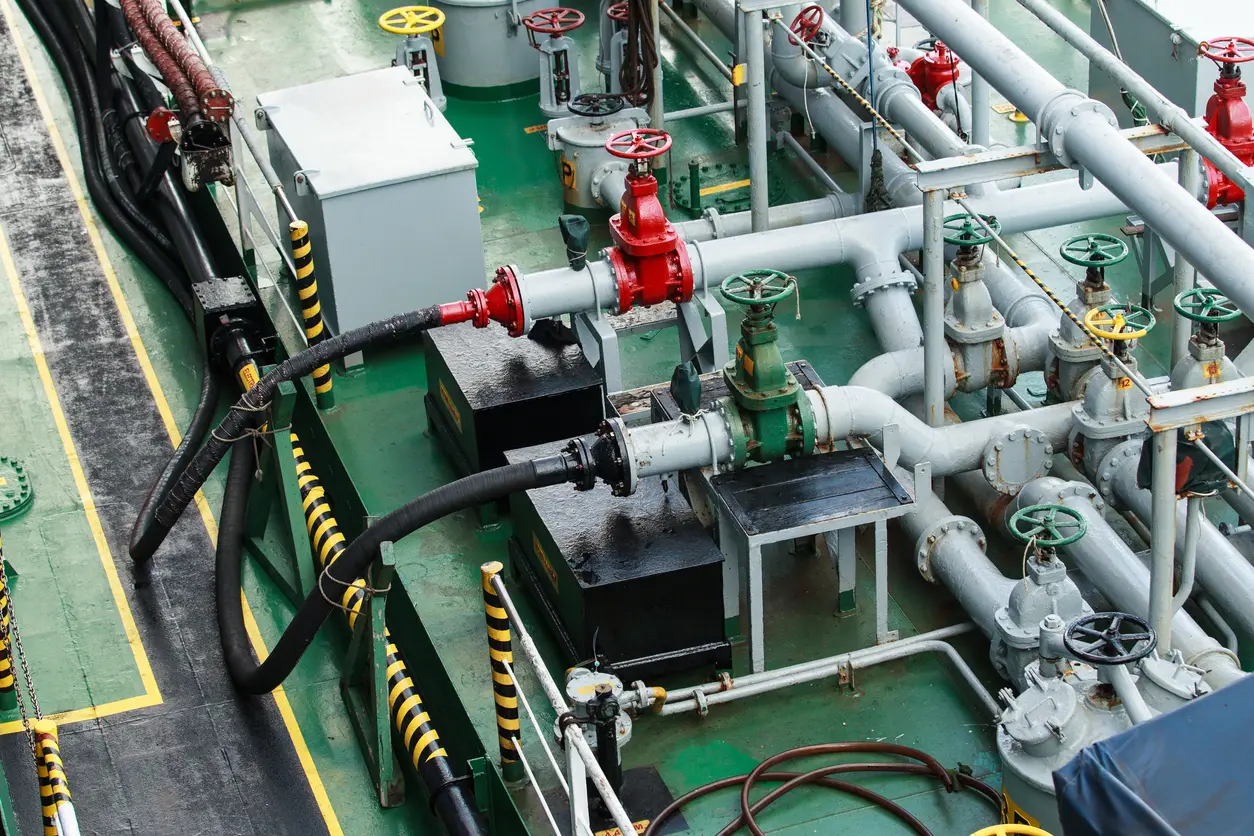
Marine fluid systems feature some of the most demanding environmental exposures and required careful design consideration. Fluid system design in general is never a one-size-fits-all solution as design has to consider the system’s function, environment, and expected maintenance or service life.
RB Royal provides the ins and outs of fluid system design for marine applications providing insights on specific challenges marine OEMs face during the design phase and how to solve them.
Defining Marine Fluid Systems
Marine fluid system design can mean designing for multiple different kinds of fluid systems. This could mean designing and manufacturing some of the following systems:
- Seawater cooling
- Ballast
- Bilge
- Fire main
- Freshwater
- Fuel
- Hydraulic power
- Compressed air
- Potable water
- Wastewater
- Chemical dosing systems
Other examples of systems can include a small bore tubing system for instrumentation or a thermal fluid loop systems that involves pumps, piping, heat exchangers, and control valves.
Focus on Function First, Then Components
Marine fluid system design should start with during the operation requirements into a design consideration. When this happens, it allows for a system to be properly designed around the operation rather than around pre-determined measured parts.
| Design Input | Question to Answer | Why it Matters |
|---|---|---|
| Fluid | What fluid type is in the system? Is it fuel, hydraulic oil, glycol-water, or other chemicals? | Can determine corrosion resistance, seal compatibility, filtration, and material selection of components |
| Flow | What are the normal, maximum, minimum, transient, and emergency flow requirements? | Drives line size, valve sizing, and pressure loss |
| Pressure | What are design pressure, operating pressure, surge pressure, relief settings, and vacuum conditions? | Determines pressure class, tubing wall thickness, fittings, hoses, and any safety devices |
| Temperature | What are fluid, ambient, startup, shutdown, and upset temperatures? | Impacts expansion of lines, seal choice, insulation considerations, and system fatigue |
| Cleanliness | What particle, water, biological, or chemical contamination is acceptable? | Drives system maintenance scheduling |
| Availability | Can a failure stop propulsion, steering, firefighting, cargo operations, or safety functions? | Establishes bypass requirements |
| Location | Is the equipment exposed on deck, in an engine room, below the waterline, or in a hazardous area? | Watches corrosion allowance, enclosure, drainage, routing, access, and certification |
Marine Design Challenges
Any fluid system design is going to have to account for the conditions and the environment of where the system will serve. For marine applications, that brings on a whole new level of challenges as water – whether it’s fresh or salt – can cause numerous challenges.
Corrosion and material compatibility presents the first challenge. If a system is exposed to saltwater, corrosion resistance in materials is going to be a top priority. That’s why stainless steel and other corrosion-resistant materials should be considered.
Other challenges that face a marine fluid system include motion, vibration, and fatigue. Ships and other vessels experience constant movement on the open waters whether they are actively sailing or not. These effects make support design and fatigue resistance required, not recommended. Additionally, space is a premium in marine environments, so designing a functional, yet spatially aware system matters. Especially serviceable items such as critical valves, filters, gauges, drains, and sample points.
Contact RB Royal for More Fluid System Design Tips Focused on Marine Applications
RB Royal serves as one of America’s most reliable and high-quality turnkey fluid transfer system components manufacturers. Since 1948, we’ve helped OEMs and supplier programs design, engineer, and manufacture numerous components for fluid systems in several different industries.
Fluid system design at RB Royal starts with our Design-ufacturing program, a one-of-a-kind engineering and designing capability where we take what’s been called impossible and find a way to make it work. When other contract manufacturers have said it can be done, we find a way to say yes.
We back our manufacturing operations through our robust and thorough quality management systems, which have been ISO 9001 and 14001 certified continuously since 1999. Supporting the process, we document and verify all ECRs, conduct internal testing/verification, and maintain a system of third-party verification of all fixtures. Our fully equipped on-site testing lab is equipped to check virtually every detail from dimensions to cleanliness testing. In addition to offering full PPAP and FAI, we also can coordinate off-site, third-party testing, and verification as required.
Have a fluid system design with a marine application in mind? Contact our team today for an initial consultation and discover the difference RB Royal can make for your next manufacturing program.