
Custom Stainless and Carbon Steel Bent Tubing for Fluid Routing Applications
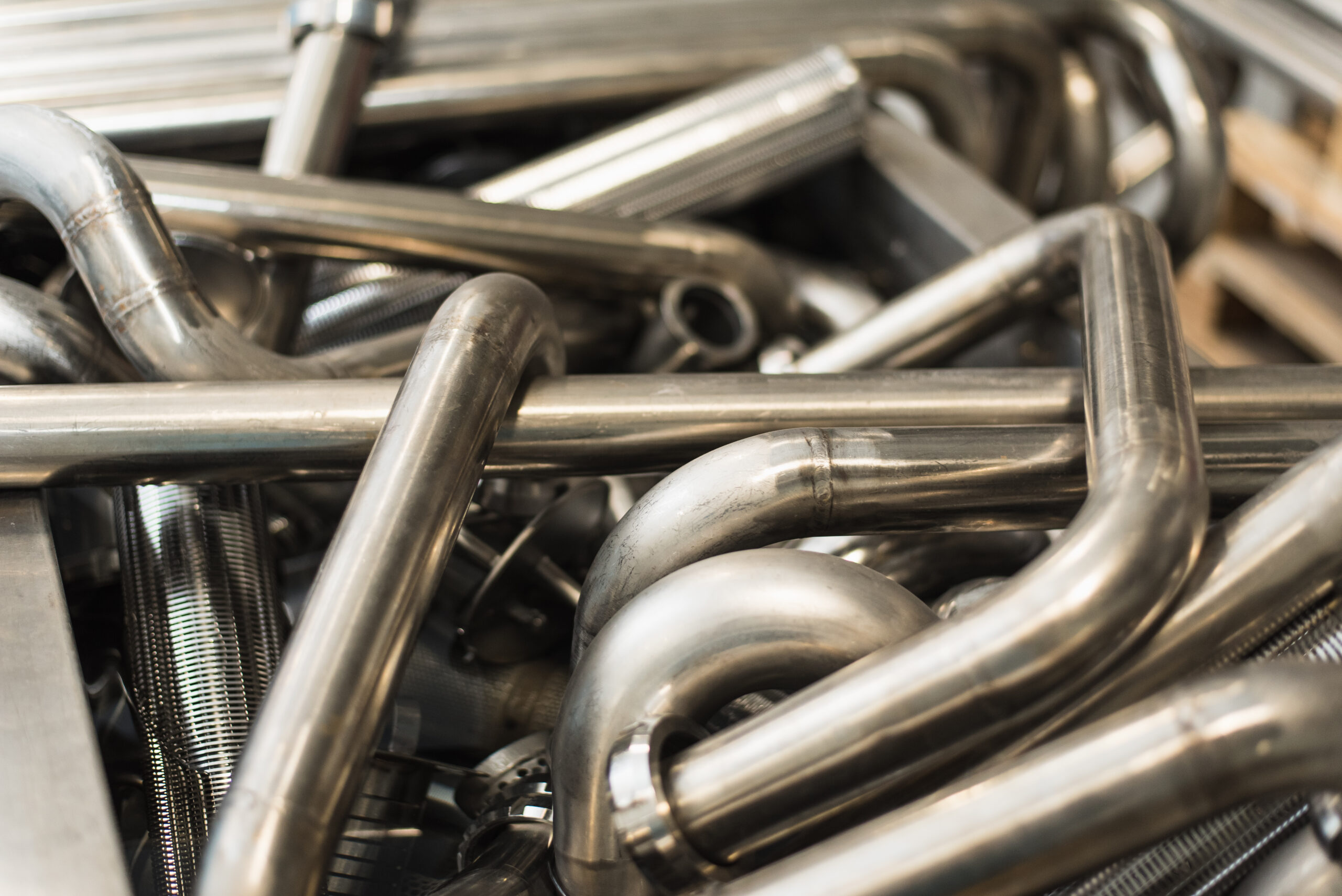
Tubing applications aren’t always going to flow in straight pathways, making custom bent tubing services a vital process to best promote functional fluid transfer systems. Whether it’s stainless or carbon steel, tube bending is critical for providing routed lines that hold shape, better manage pressure, and ultimately simplify the assembly process.
While the two materials listed differ in terms of benefits in application, both stainless and carbon steel can be bent to best fit your fluid system.
RB Royal discusses how custom bent tubing services on custom stainless and carbon steel tubes impact the overall performance of fluid routing applications in your fluid system.
Understanding Material Application
Stainless and carbon steel both offer unique advantages as a material within a fluid system, but the two materials do provide different advantages as well as potential challenges in custom bent tubing services.
Stainless Steel
No matter what grade, stainless steel is one of the most commonly used materials in fluid transfer systems because of its natural corrosion-resistant properties. Many OEMs in the hydraulic, pneumatic, oil and gas, water, and other industries will use stainless steel, namely 304 and 316 grades, because of the high levels of corrosion resistance they offer, which promotes longevity within their fluid systems.
Carbon Steel
While there are measures to make carbon steel corrosion resistant if need be, this type of steel is the more common choice where costs are the top priority, as it is a more budget-friendly steel to work with. Additionally, OEMs in industries with less demanding environments will use carbon steel and treat or coat it to ensure some levels of corrosion resistance.
Custom Bent Tubing Operations
When partnering with a turnkey manufacturer, such as RB Royal, the tube bending process all takes place within the manufacturer that’s already producing your tubes. This keeps costs in check, as transportation costs associated with sending the product to and from a third-party vendor are eliminated.
But it’s more than costs for OEMs when it comes to custom bent tube operations. Tube bending operations can be achieved through multiple methods, including threading, welding, flaring, and end-forming, in order for the line to go directly into assembly. One of the most common forms of bending operations, specifically for stainless steel, is mandrel bending. In mandrel bending, a solid rod is inserted into the tube during the bending process to maintain support of the interior walls and eliminate any potential defects during bending.
Carbon steel is an easier material to work with compared to stainless steel, which means normal bending operations can be performed with minimal risk of defects.
Designing for Bending
If your team knows your project is going to require tube bending operations, there are ways to streamline the process during this design phase of your project.
- As these tubes are being bent for fluid routing applications, designers should focus on bend radii, wall thickness, end connections, and corrosion exposure, as well as determining if the line needs to withstand vibration or repeated thermal cycling.
- Where applicable, simplify part geometry. The more complex the shape is, the more difficult and time-consuming the bending process is going to be, all of which drives costs up.
- Check with your manufacturer and engineering team if 3D modeling is an option to perform simulations to see how the finished product will look.
Partner With RB Royal for Custom Bent Tubing Services Today
RB Royal, located in Fond du Lac, Wisconsin, has been an industry-leading turnkey fluid transfer systems component manufacturing company since our doors opened in 1942. With a highly skilled team of technicians, experienced and knowledgeable engineers, and seasoned leadership, our collective team knows what it takes to create highly functional parts to keep your fluid transfer systems running.
Custom bent tubing operations play a vital role in our facility and, by extension, your fluid system. No system is ever going to feature only straight routes, so creating bent tubes to ensure smooth flow, higher performance, and minimal defects is vital. We perform high-level quality management practices in our facility, including part production approval processes, process flow diagrams, material and performance tests, and FMEA practices.
Our long-standing ISO 9001 certification is the backbone of our QMS operations, highlighting our commitment to providing our customers with a high-quality operation every step of the way.
Contact RB Royal today for custom bent tubing services and see the difference we can make in your next project.