
Stainless Tubing Bend Radius for Designing High-Pressure Fluid Applications
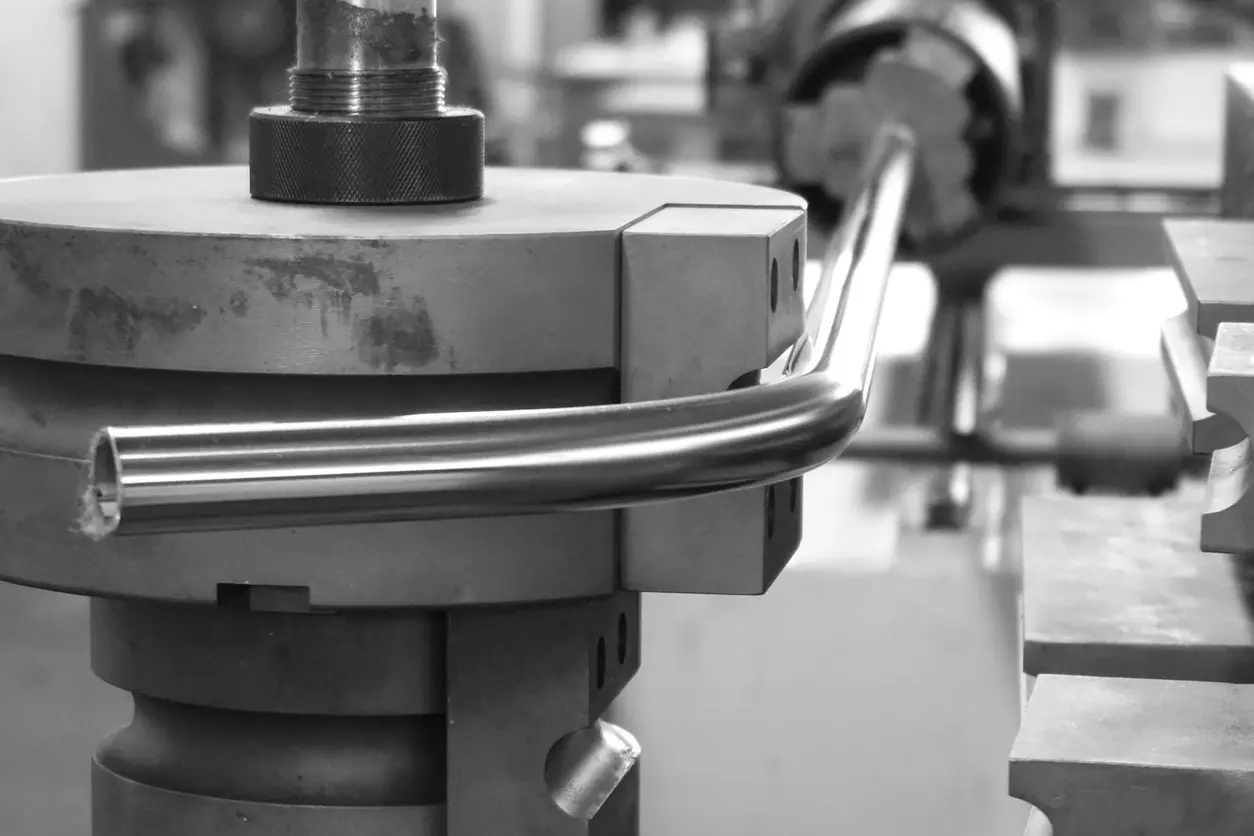
Stainless steel tubes serve as some of the most efficient and highly reliable parts of a high-pressure fluid system. From their natural corrosion resistance capabilities to their durability and strength, OEMs can count on stainless steel in numerous applications.
However, no fluid system is typically going to feature straight-tubing, and that requires bending operations. Stainless tubing bend radius is one of the most important factors to have locked down before bending operations begin to ensure overall health of the tube and the fluid system.
RB Royal highlights best practices designing high-pressure fluid systems with the stainless tubing bend radius as a focal point.
Core Principle of Stainless Tubing Bend Radius
The basis for a stainless tubing bend radius conversation is proper identification of the centerline radius, which is the radius measured to the longitudinal axis of the tube. When that centerline radius and its value have properly been collected and accounted for, bend radius becomes the next phase to work through.
Since it’s a high-pressure system, bending operations aren’t just a routing feature, they must be considered part of the pressure-boundary design. Tight bends can thin the tube’s outside wall while compressing the inside and those changes reduce pressure capacity if the proper approach isn’t taken.
Design Considerations
Tube bending shouldn’t be treated as a secondary operation, but part of the entire manufacturing process starting at the design phase. This starts with a few key parameters.
Selecting the Tube Before Finalizing Shape
Specify the alloy and condition of stainless steel material as different grades don’t behave the same. Lock in the tube outside diameter and minimum wall thickness. Incorporate maximum allowable working pressure and account for fluid compatibility, pressure cycle profile, pulsation, vibration, and surge pressure.
Specify Straight Tangents Near Fittings
It’s critical to leave straight, undistorted tubing between a bend and a mechanical tube fitting. Fittings require a round and properly supported tube for a reliable grip and seal. During the design phases, it’s recommended to not dimension a bend so that it begins at the fitting. Rather, call out the fitting, a minimum straight tangent, bend centerline radius, bend angle, orientation, and any allowable tolerances.
Address and Account for Springback
Stainless steel commonly springs back after bending as occurred and the rate of it depends upon material condition, wall, radius, and tooling. Be considerate of the potential springback and account for any differences with your manufacturer.
Partner with RB Royal for more Stainless Tubing Bend Radius Insights and Expert Operations
RB Royal serves as a turnkey tube manufacturer and a full fluid transfer systems solutions manufacturer. Located in Fond du Lac, Wisconsin, our team of expert technicians, engineers, designers, and executives work together to create long-lasting, high-quality OEM solutions that are built to last.
As a turnkey tube manufacturer, we’re able to perform the tube bending operations your team and your fluid system need. Through a mix of robotics and automated capabilities, we’re able to bend multiple types of steel-based tubes into the exact shapes needed.
Quality always comes first at RB Royal. Our two-decades plus of continuous ISO 9001 certified demonstrate our ability to support and operate high level quality management systems but that’s only reaching the standard. We perform numerous testing services and inspections/analysis to ensure part performance.
Want further insights on stainless tubing bend radius for high-pressure fluid applications? Contact RB Royal today.