
Best Thermal Fluid System Design Practices for HVAC Systems Using Copper and Stainless Steel
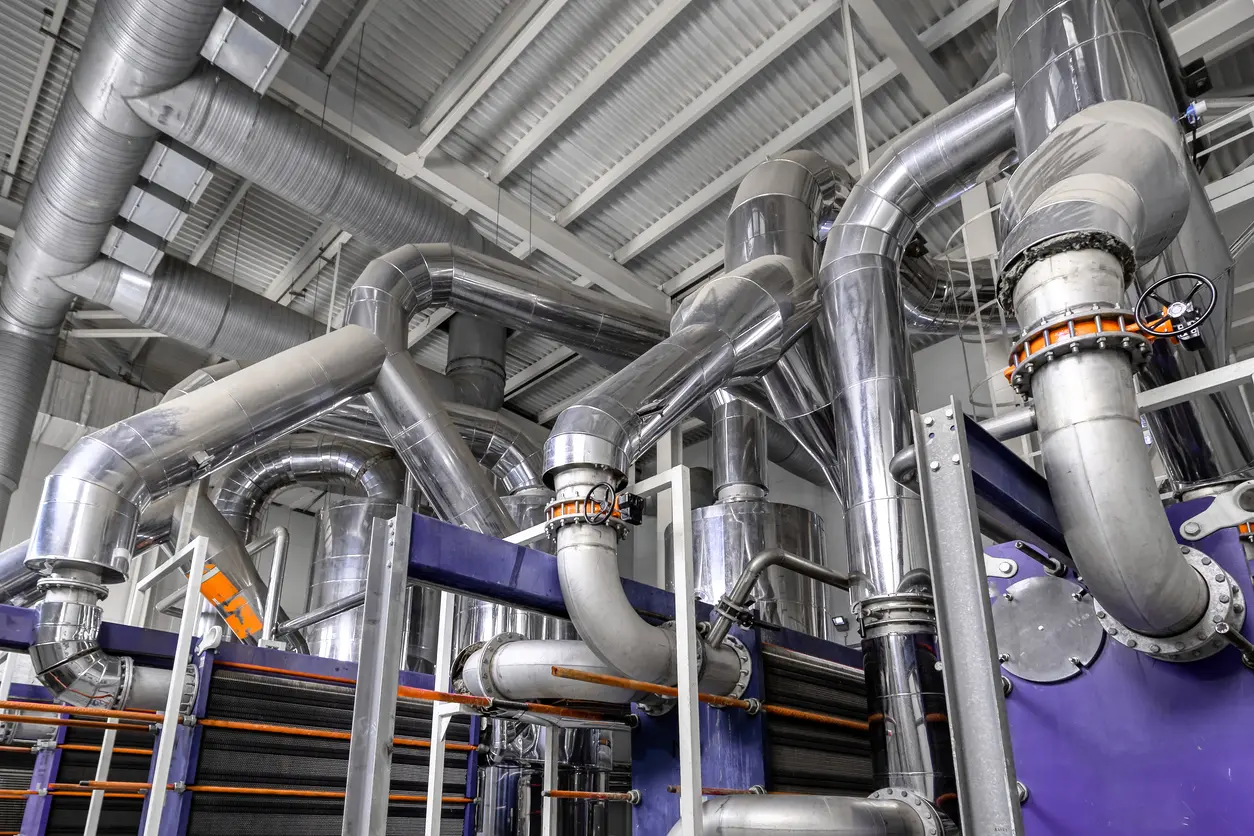
Thermal fluid system design accounts that use both copper and stainless steel has already accounted for material selection, but there’s much more to it than that. While material selection plays a role, matching material properties to the fluid system’s application and environment matters. Ensuring the components and sized appropriately for velocities and pressure changes, while accommodating for thermal expansion is part of the design work.
RB Royal highlights and lists out of some of the best thermal fluid system design practices for HVAC systems that are using copper and stainless steel throughout.
Weighing Copper vs Stainless Steel
If thermal fluid system design considerations are focused on using copper and stainless steel, then it’s important to note the differences between the two materials and where they should be placed.
The main items materials should support include heat-transfer performance, corrosion resistance, mechanical strength, hygiene, and lifecycle costs along with any maintenance.
For a quick best practice: value copper in spots where cost-effectiveness, compactness and heat transfer are the priorities, and value stainless steel in spots where corrosion resistance, strength, and long-term durability are the main driving points.
Copper
As a material choice in an HVAC thermal fluid system, copper offers high levels of thermal conductivity which is necessary. Copper is commonly used as the material source for refrigerant lines, compact heat exchanges, and coils that are exposed to heat transfer elements.
Viewing the mechanical strength of copper requires design teams to quick identify where exactly copper components are going to serve in the fluid system. In general, copper has average mechanical strength and when sized correctly, can withstand the pressures commonly found in HVAC units. Corrosion resistance is best in freshwater for copper. That corrosion resistance becomes limited when exposed to chlorides, ammonia, and erosion-corrosion at high velocities.
Stainless Steel
Stainless steel isn’t an ideal material as far as thermal conductivity is concerned, but there are many other material properties that matter. This material thrives in corrosive and chloride-rich environments and is best seen in high pressure or high temperature loops for long service life requirements. Stainless steel is one of the best naturally corrosion resistant materials, particularly against chlorides, acids, and oxidizers.
This material can be used for more structural aspects in the thermal fluid system design process and in high stress areas of an HVAC system because of its high tensile strength. As long as chemistry and welding during the joining process is controlled, stainless steel components can last anywhere between 50-100 years in multiple applications.
The Galvanic Corrosion Conversation
When the thermal fluid system design process for HVAC applications is occurring and the design team knows multiple metals are going to be used, it’s absolutely critical to have the galvanic corrosion conversation.
Galvanic cells are created when there is direct contact between copper and stainless steel in the presence of an electrolyte. Once formed, these cells speed up corrosion throughout a fluid transfer system. In order to avoid the formation of galvanic cells, RB Royal recommends these practices and to incorporate them into your design.
- Install dielectric unions or flanges
- Allow for brass or bronze fittings
- Avoid direct mechanical contact
- Validate in submittals
Accounting for Thermal Expansion
Different materials contain different properties and knowing the expansion rates of copper and stainless steel matters greatly in thermal fluid system design. Even though copper and stainless steel expand at different temperatures, there are some strategies that can be put in place to support expansion.
The implementation of expansion loops and expansion joints is one of the most common strategies. U or Z bends can be used where space is available in the system, and they absorb movement without adding any joint forces. Different joints such as bellows or slip-type are best used where space is limited. Selection between these two joints is determined by pressure and temperature ratings, and matching those to system conditions.
Partner with RB Royal for More Best Practices in Thermal Fluid System Design Operations
RB Royal is one of the United States premier turnkey fluid transfer system components manufacturers, specializing in creating truly authentic components for OEMs. Since 1942, our team of designers, engineers, machine operators, quality managers, and executives have worked together to create solutions that are built to last.
Thermal fluid system design operations at RB Royal are best highlighted by our Design-ufacturing program. This program combines the best of our design and engineering capabilities into one streamlined operation that takes the impossible and turns it into a functional design that’s ready for manufacturing.
Our design-ufacturing program, along with all of our other capabilities, are backed by our superior quality management systems. We’ve been ISO 9001 certified for nearly 30 years and that’s thanks to our numerous in-house quality management capabilities including part testing and verification, PPAP, and FEMA.
Working on your thermal fluid system design? Contact RB Royal today and let’s partner together to create something great.